
Summary
ShopAble in the Park 2025 showcased how agentic AI is revolutionizing daily operations for marketing teams. According to McKinsey 2025, commerce-media operating models and off-site expansion continue to accelerate as marketers formalize AI use. From automating data-heavy tasks to enabling faster insights and smarter strategic decisions, tools like Celeste AI are freeing marketers to focus on creativity and innovation.
Last updated: October 30, 2025
ShopAble in the Park 2025 brought the energy of Skai’s flagship US event to London. This reimagined, festival-style gathering of commerce media leaders took place at Shoreditch Gardens, delivering fresh ideas, industry-shaping conversations, and plenty of inspiration. With topics spanning AI, omnichannel strategy, and the future of retail media, ShopAble in the Park marked a pivotal moment for the UK commerce media community.
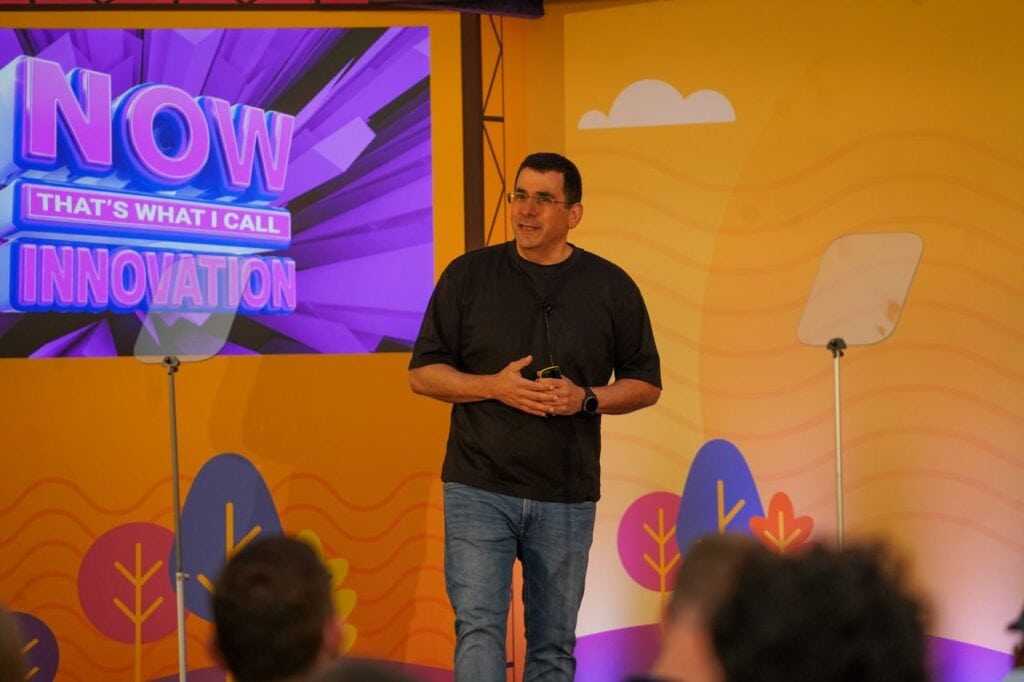
The age of agentic AI is here, and it’s fundamentally changing how marketing teams operate day-to-day. What started as a vacation planning experiment with ChatGPT has evolved into Celeste AI, the first GenAI marketing agent purpose-built for commerce media, now serving Skai clients who can’t imagine working without it. The transformation isn’t just about automation, it’s about freeing marketers from repetitive tasks so they can focus on what only humans can do: strategize, innovate, and dream.
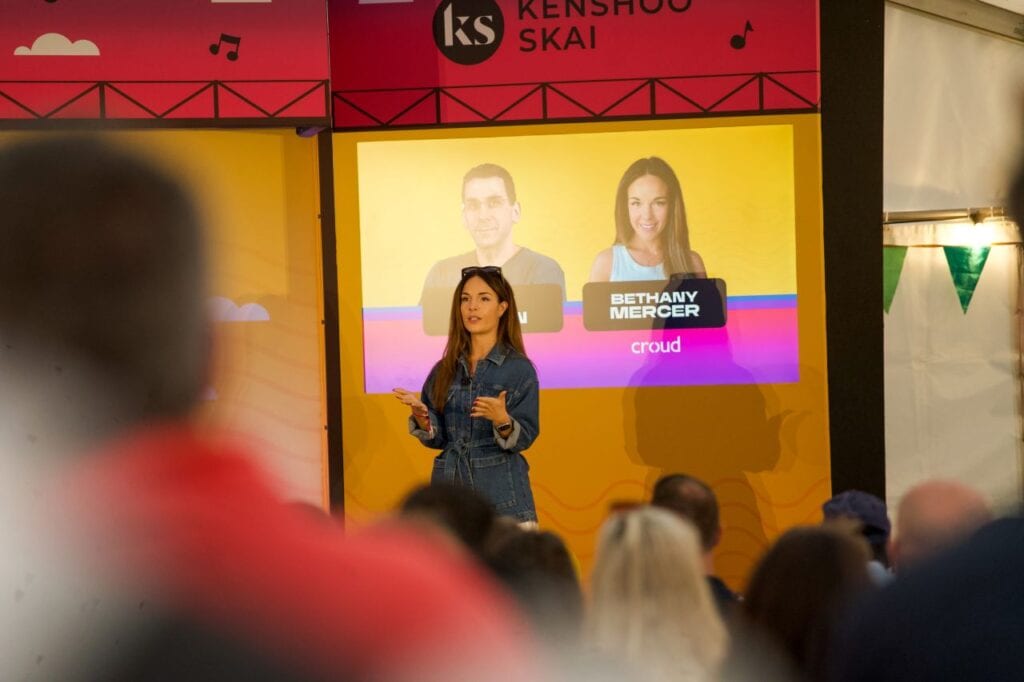
Skai Chief Product Officer Guy Cohen’s keynote and chat with Bethany Mercer, Retail Media Strategy Director at Croud, revealed how AI agents have evolved from experimental tools to daily essentials, with live demonstrations of autonomous campaign execution and strategic planning that are already providing users with 30-50% efficiency gains alongside 10-20% performance improvements.
Micro-answer: Faster decisions, proven lift, safer autonomy.
What are the key requirements for AI marketing agents?
- Agentic AI moves from experiment to essential for teams managing complex performance programs. Secure, trustworthy, domain-deep.
- Agents must run in a closed environment, protect data, and truly understand performance marketing’s nuances to be useful beyond demos. The NIST AI Risk Management Framework (2023) details controls for trustworthy AI, including governance, measurement, and monitoring.
Cohen: “Two years ago, we created the concept of a marketing agent and shared the idea with a few clients. Their response? Extremely positive. They immediately saw how this agent could fit into their daily work, helping them move faster and uncover opportunities they wouldn’t normally have time to explore.
“But they were also clear about the requirements for this kind of technology. It must operate in a closed, secure environment with no data sharing. It must be trustworthy, and it must deeply understand the performance marketing universe with all its complexity, nuances, and years of hard-earned knowledge.”
What types of questions are marketing teams asking?
- Leaders get the most value by asking summarization, insight, and recommendation questions. Three question archetypes win.
- Snapshot summaries, deep insights (e.g., cross-channel correlations), and strategic plans (e.g., where to invest incremental budget) are where agents shine today.
Cohen: “What stands out the most wasn’t just how people were using Celeste, it was the questions they were asking. Questions that pushed boundaries, surfaced hidden insights, and helped them make faster, smarter decisions. We found that the questions naturally fell into three main categories.”
“The first is summarization from a quick snapshot, like ‘summarize last week’s performance and identifying underperforming campaigns,’ to a full executive briefing question like ‘create a QBR for last quarter with 10 slides, highlight brand performance, product performance, publisher performance, geo performance, etc., and add some actionable insights into it.’”
“The second category is around insights. Clients enter prompts like, ‘Let’s prepare for special events. Analyze last year’s special events, such as back-to-school, and provide me with a way to improve my performance by 15%.’ Or they’re checking for correlation: ‘Find me a correlation between my Facebook brand awareness investment and Amazon sales performance.’”
“And the third category is around recommendation. Probably the most significant client requests asked of Celeste are around developing a strategic plan. One example: ‘I have an additional 10% of budget. What is the best way or the optimal way to invest it to get the best outcome?’”
How is this transforming day-to-day work?
- Teams recover hours to redirect toward strategy, creativity, and client collaboration.
- Time back, satisfaction up.
- Analysts spend less time extracting and cleaning data and more time advising; job satisfaction improves as repetitive tasks shift to the agent and people focus on higher-value work.
Mercer: “We got our amazing Skai team to come and spend a day with us in our office and really [explain] how Celeste works and how best to speak to it in a way that would give us those really deep, deep insights back. We can’t imagine or even remember a world where we didn’t have Celeste.
“I think the real huge value that we’ve seen at Croud is the time that it’s allowed back to our team. So B.C. (before Celeste), our data analysts and our strategists were spending a lot of time – in some cases hours and days depending on how complex the data was – extracting it, cleaning it, analyzing it, to come to the deep analysis and insight and the ‘so what’ we like to deliver to our clients. It is a bit frustrating to spend that time, so we were really able to get a lot of time back for the team, which has really enabled us to do what we do best.
“This might be a little bit divisive, but I don’t think many marketers get into their roles because they love the idea of spending their day in Excel spreadsheets and going square-eyed looking at numbers. That time and that skillset are far better invested into those strategic pieces of analysis and what you’re going to action off of the back of that data so we’ve really been able to reinvest our analysts and our team into those more strategic advisory positions. And actually, what I think has been the most valuable thing for us is the level of job satisfaction that our team is getting out of using the tool.
“They’re able to spend that [freed-up] time coming up with those really cool ideas and spending time with clients. A lot of our clients have complex roles and businesses, and retail media is really a small part of that. So being able to understand that whole holistic view of our clients’ businesses really allows our teams to be able to come up with those out-of-the box ideas that really gives them that happiness in their role and gives our clients incremental value.
“It is a really strong reminder for me that AI should enhance that team and do the heavy lifting for our really skilled strategists and allow the humans to do what they do best.”
What does the future of AI agents look like?
- Agents evolve from expert assistants to personalized teammates to autonomous operators under adjustable guardrails. From expertise to autonomy.
- Phase 1 answers questions; Phase 2 learns your org’s goals and language; Phase 3 executes within defined autonomy levels—manual, supervised, or fully autonomous—as trust and accuracy improve.
Cohen: “What excites me most about Celeste… is that everything you’ve seen today is just Version 1. This is the foundation, the starting point for something much bigger. Our vision is bold but clear: to reimagine what a marketing team can look like in the age of AI.
“The first generation of AI agents, like the original version of Celeste, focused on expertise. These agents understood performance marketing, answered specific questions, and delivered valuable insights.
“The second generation is about personalization. These agents will learn your organization’s goals, processes, and language. They’ll provide answers tailored not just to marketers — but to your marketers, in your business context.
“The third generation adds autonomy. These agents will go beyond answering questions — they’ll take action. You’ll be able to define the level of autonomy you’re comfortable with: from fully manual, to supervised, and eventually to fully autonomous execution. As trust builds, the agent can take on more responsibility — and you’ll simply review the outcomes.
“Think about the world when you’re building dozens of agents, each with a specific scope and job-to-be-done, and you control the level of autonomy. Think of how much time it will free. Think how your world will look like working with this kind of agentic environment.”
Key Takeaways for Marketing Leaders
- Agentic AI is already delivering 30% time savings and double-digit performance gains across 100+ brands and agencies. Operationalize, don’t pilot forever.
- Invest in prompt training, standardize measurement, and align autonomy with risk so humans focus on creative and strategic work while agents handle spreadsheets and repetitive analysis.
Agentic AI is already transforming daily marketing operations. With 100 brands and agencies using Celeste daily and reporting 30% time savings, AI agents have moved from experimental to essential. Teams are reinvesting saved time into strategic work that drives real business value.
The questions marketers ask reveal AI’s true potential. Rather than replacing human insight, AI agents excel at three key areas: comprehensive summarization, deep analytical insights, and strategic recommendations. The most powerful use cases emerge when marketers ask questions they never had time to explore before. Operationalize prompts and guardrails with Celeste AI for AI-powered marketing across channels.
Successful AI implementation requires proper training and prompting. Like briefing human team members, AI agents need clear, specific instructions to deliver valuable results. Organizations that invest in prompt engineering and training see dramatically better outcomes than those that expect immediate perfection.
AI agents free humans to do uniquely human work. The real transformation isn’t about replacing marketers; it’s about eliminating the tedious data extraction and analysis that prevents strategic thinking. When AI handles the spreadsheets, humans can focus on innovation, strategy, and creative problem-solving.
The evolution from assistive to autonomous is already underway. AI agents are progressing through three phases: expertise-focused assistants, personalized team members, and autonomous operators. Organizations can control autonomy levels for different tasks as trust and accuracy improve.
Conclusion: How Can AI Integration Transform Your Marketing Team?
- Build AI into the team’s DNA with governance, shared KPIs, and closed-loop proof—not as a side project.
- Prove lift, then scale.
- Start with high-value, testable use cases; keep humans in the loop; and codify wins into playbooks so improvements persist beyond pilots.
Guy Cohen’s compelling ShopAble keynote and discussion with Bethany Mercer revealed how vacation planning with ChatGPT sparked the creation of Celeste, now revolutionizing daily operations for over 100 brands and agencies. This demonstration of AI evolution from assisted to personalized to autonomous agents showed attendees exactly what the future of marketing work looks like when humans and AI collaborate seamlessly.
The key insight? Stop treating AI as a side project and start building it into your team’s DNA. Whether you’re creating campaign strategies, analyzing performance data, or optimizing budgets, the question isn’t whether AI will transform your role, it’s whether you’ll lead that transformation or be left behind by competitors who embrace it faster. The tools exist today, start your journey now. Explore our omnichannel marketing platform to connect retail, search, and social workflows with AI-driven insights.
We appreciate your engagement with these insights from ShopAble in the Park 2025. These conversations about AI’s role in marketing are just beginning, and we’re excited to explore what’s next with you at future events.
Learn more from the ShopAble in the Park 2025 expert sessions:
- GenAI’s Role in Commerce Media
- Does Retail Media Belong with Commerce or Media Teams
- Is Retail Media Unstoppable, or a Bubble About to Burst?
Related Reading
- How Acosta Group Streamlined Reporting and Empowered Its Team with Celeste AI— Automated insights cut reporting from hours to minutes, freeing teams for strategy.
- How Marshall Helped ZUP to Drive Revenue and Outmaneuver Competitors Using AI-Powered Insights— GenAI-assisted analysis reduced CPC 44% and lifted ROI 34%.
- Tinuiti Drives 24% Revenue Growth Through AI-Powered Amazon Optimization for Full Moon Pet— Portfolio Optimization and Budget Navigator improved conversion efficiency without extra spend.
Frequently Asked Questions
Begin with clear requirements: secure data handling, trustworthy outputs, and deep marketing expertise. Invest time in prompt engineering training, just like you would brief human team members, and start with supervised execution before increasing autonomy.
AI agents excel at three categories: summarization (from weekly performance snapshots to executive briefings), insights (correlation analysis and performance optimization), and strategic recommendations (budget allocation and campaign planning).
Successful implementation uses configurable autonomy levels, full automation for routine tasks like event planning, supervised execution for budget allocation, and manual control for critical decisions. Teams gradually increase automation as trust and accuracy improve.
Glossary
Agentic AI — Autonomous or semi-autonomous systems that can plan and take actions within guardrails; value measured via time savings and incremental outcomes.
Closed-loop measurement — Linking exposures to confirmed transactions and lift for CFO-friendly proof across channels and retailers.
Incrementality testing — Causal methods (geo split, PSA, holdout) to estimate lift from an agent’s recommendations before scaling.
Autonomy levels — Manual, supervised, or fully autonomous execution modes that vary by task risk and required oversight.
AI governance — Policies, controls, and monitoring aligned to the NIST AI RMF (2023) to manage risk and ensure trustworthy use.
More like this
-
The 2026 State of Amazon Ads: What’s Working, How Advertisers Are Leveling Up, and What the Industry Can Learn
-
The 2026 State of Retail Media Fragmentation: 7 Challenges Brands Must Solve to Scale
-

The 2026 State of Retail Media DSP, CTV, and Social Commerce: Accelerating Beyond the Shelf
-

2026 CPG Industry Preview: Food & Beverage Marketing Guide
-

AI, Automation, Authenticity: The Three Trends Redefining Social Commerce
-
The 2026 State of Retail Media Measurement and Incrementality