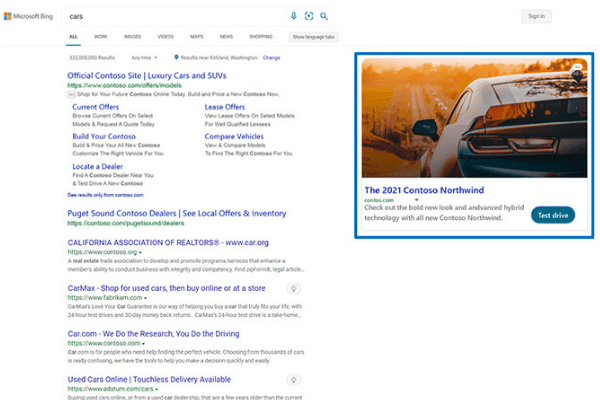
Une nouvelle ère dans le marketing des moteurs de recherche a commencé. Le 30 juin 2022, Google a supprimé les annonces textuelles étendues (ETA), le format d'annonces payant par défaut depuis de nombreuses années.
Cette décision n'a pas été prise à la légère. Google a donné aux spécialistes du marketing de recherche un an à l'avanceMon collègue Joe Bernal et moi-même en avons parlé sur notre blog, en a parlé sur notre blog peu après l'annonce. Désormais, les spécialistes du marketing ne peuvent créer de nouvelles annonces qu'en utilisant le format "responsive search ad" (RSA).
La bonne nouvelle, c'est que presque personne ne manquera les ETA car les annonces de recherche réactives sont tout simplement... meilleures. Elles sont plus rapides à créer, plus faciles à gérer et, de l'avis général, elles sont plus performantes que les ETA.
Rappelez-vous qu'au lieu de rédiger des annonces textuelles manuellement, avec les ASR, les spécialistes du marketing de recherche fournissent à Google 3 à 15 titres et 2 à 4 lignes de description, ce qui se traduit par 42 680 combinaisons d'annonces!
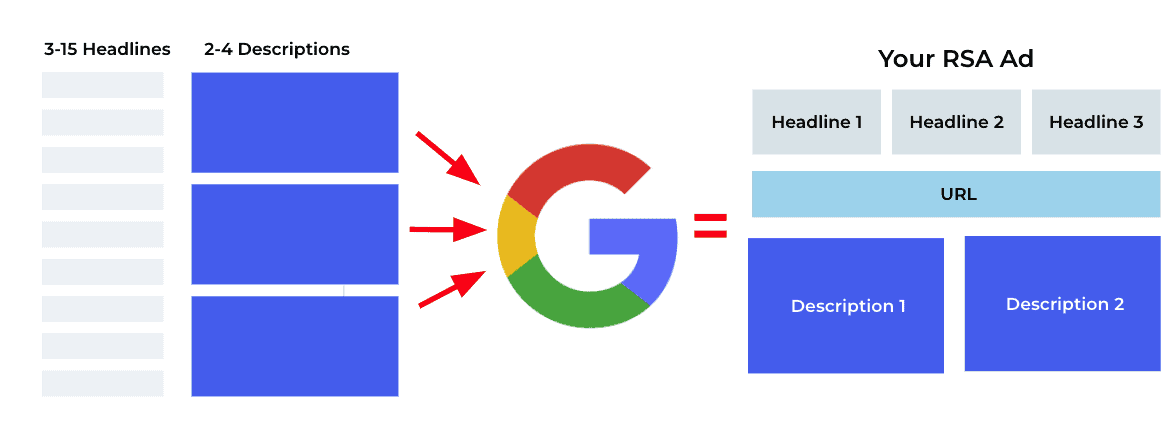
Plus important encore, ils tirent pleinement parti de l'impressionnant ensemble de données de Google au niveau de l'utilisateur et de son évolution récente, au cours des dernières années, vers l'automatisation pilotée par l'IA. En tandem avec les stratégies d'enchères automatisées, les RSA permettent aux spécialistes du marketing de consacrer plus de temps à d'autres domaines clés de l'optimisation du référencement payant afin d'accroître les performances.
Vous avez probablement déjà une certaine expérience des ASR. Mais pour être sûr d'être prêt pour cette nouvelle ère du SEM, voici cinq bonnes pratiques essentielles pour l'utilisation du format d'annonce par défaut de Google Search :
Assurez-vous que toutes vos combinaisons fonctionnent ensemble
L'ancien conseil était d'avoir au moins 3 à 5 ETA dans chaque groupe d'annonces pour optimiser les performances. Le fait d'avoir beaucoup, beaucoup, beaucoup de fois ce nombre d'annonces disponibles avec une seule annonce de recherche réactive signifie que la plupart des spécialistes du marketing de recherche essaieront sans aucun doute de remplir leurs ETA avec la limite maximale de titre et de description.

Mais il y a un peu de complexité et de nuance ici qui est nécessaire au-delà de la simple rédaction d'un tas d'actifs. N'oubliez pas que Google peut utiliser n'importe lequel de vos 4 titres et n'importe laquelle de vos 15 lignes de description, dans n'importe quel ordre. dans n'importe quel ordre. Mais n'oubliez pas que les consommateurs ne voient pas les titres et les lignes de description ; ils voient les listes des moteurs de recherche - et plus de la moitié d'entre eux ne les voient probablement pas.et plus de la moitié d'entre eux ne se rendent probablement pas compte qu'il s'agit d'annonces..
Voici une liste de contrôle pour vous :
- Essayez chaque titre avec la même ligne de description
- Prenez trois titres et inversez l'ordre
- Créez au hasard trois descriptions en utilisant des combinaisons de deux
Maintenant, toutes les combinaisons de titres fonctionnent-elles avec les différentes combinaisons de descriptions ? Se lisent-elles bien ou semblent-elles bizarres ? Ont-elles toutes un sens ? Certaines sont-elles trop répétitives ?
La caractéristique d'un RSA exceptionnel est que les 43 680 combinaisons ont l'air et donnent l'impression d'avoir été faites à la main.
C'est une bonne leçon pour les spécialistes du marketing qui commencent à travailler avec l'IA. Et ce n'est pas seulement pour les ASR... pensez à tous les endroits où l'intelligence artificielle commence à imprégner le marketing. Nos rôles changent. Les spécialistes du marketing doivent comprendre les mécanismes de ce qui se passe en arrière-plan pour fournir aux machines intelligentes les informations correctes. Cela ne signifie pas qu'il faille être diplômé en science des données, mais simplement qu'il faut faire preuve d'une attention et d'un soin particuliers lorsque l'on confie des tâches de marketing à l'automatisation.
C'est une transition parfaite vers le conseil suivant !
Gardez le contrôle grâce à l'épinglage RSA
Oui, chers spécialistes du marketing, à mesure que l'IA s'immisce dans notre vie quotidienne, le rôle des spécialistes du marketing va évoluer. L'une de nos principales tâches consistera à superviser nos collègues intelligents et à prendre le contrôle à des moments critiques, lorsque cela s'avérera le plus judicieux.
Nous avons tous probablement un exemple dans notre vie professionnelle ou personnelle où l'automatisation a déraillé. La clé pour tirer le meilleur parti de l'IA est donc de savoir quand et où intervenir.
Par exemple, l'épinglage. Google offre la possibilité d'épingler des titres et des lignes de description à des positions spécifiques. Ce niveau de contrôle de vos annonces de recherche réactives.
Et Google fournit une série de conseils très concis sur l'épinglage que vous devriez suivre :
L'épinglage d'un titre ou d'une description a pour effet de ne l'afficher qu'à cet endroit précis, empêchant ainsi les autres titres ou descriptions de s'afficher à sa place. Étant donné que l'épinglage réduit le nombre total de titres ou de descriptions pouvant correspondre à la recherche d'un client potentiel, il n'est pas recommandé à la plupart des annonceurs.
Essayez d'épingler 2 ou 3 titres ou descriptions à chaque position, de sorte que n'importe lequel d'entre eux puisse s'afficher à cette position. Vous disposerez ainsi d'une plus grande marge de manœuvre pour déterminer quels titres ou descriptions sont les plus performants.
Exemple : Si vous épinglez le titre "Site officiel" en position 1, toutes les annonces afficheront "Site officiel" comme premier titre. En revanche, si vous épinglez un second titre, tel que "Site officiel", en première position, toutes les annonces afficheront soit "Site officiel", soit "Site officiel" comme premier titre.



Si vous avez épinglé des titres et/ou des descriptions sur tous les postes disponibles, les titres et/ou les descriptions non épinglés n'apparaîtront pas.
Cette dernière ligne du conseil de Google est une excellente transition vers notre prochain conseil.
Vous aimez vraiment les ETA ? Créez des "pseudo-ETA" à partir de RSA grâce à cette astuce.
J'aimerais bien m'en attribuer le mérite, mais je dois l'attribuer à Kerri Amodio de ClosedLoop dans un article récent sur SearchEngineLand.com.
Amodio a publié un excellent article sur l'amélioration des taux de conversion des ASR, mais c'est son conseil sur la création d'ETA avec les ASR qui m'a semblé intéressant pour d'autres spécialistes du marketing de recherche. En gros, en fournissant à Google trois titres et deux lignes de description, et en les épinglant, vous créez ce qu'elle appelle des "pseudo-ETA".
Le cas d'utilisation d'Amodio était un test d'optimisation des performances. La version non épinglée de ce pseudo-ETA 3×2 a fait baisser le CPL de 45 % par rapport à la version épinglée. Il s'agit d'une bonne confirmation de la nature réactive des RSA et de la raison pour laquelle Google a dû avoir confiance en ce format lorsqu'il a effectué son changement.
Son test mis à part, je pourrais voir des utilisations pratiques pour les pseudo-ETA :
- Si ce n'est pas cassé... N'oubliez pas que non seulement vous ne pouvez plus créer d'ATE, mais que vous ne pouvez pas non plus les modifier. Par conséquent, si vous avez déjà des ETA de qualité, vous voudrez peut-être continuer à les utiliser tout en étant en mesure de les mettre à jour.
- Assurer la clarté. Comme vous pouvez le voir dans les exemples d'épinglage ci-dessus, certaines combinaisons d'ASR peuvent être bizarres. Il est possible qu'en raison d'un jargon ou de noms de marques bizarres, vous deviez parfois épingler pour vous assurer que les combinaisons de publicités ne sont pas étranges.
- Tester des idées. Les annonces de recherche ont été l'un des moyens de tester rapidement et à peu de frais les messages dans un environnement réel. Les messages gagnants peuvent être diffusés dans les médias sociaux, les publicités télévisées, etc. Les ASR compliquent un peu la tâche, car ils ne permettent pas d'obtenir des rapports au niveau le plus granulaire (c'est-à-dire 46 830 façons de faire !). Les pseudo-ETA permettent donc de continuer à vérifier les idées aussi simplement qu'auparavant.
 Rappelez-vous les meilleures pratiques fondamentales en matière de publicité
 Rappelez-vous les meilleures pratiques fondamentales en matière de publicité
Bien sûr, le jeu a complètement changé dans un monde exclusivement axé sur l'ASR. Mais cela ne signifie pas que les connaissances et l'expérience acquises pendant plus de vingt ans n'ont plus de valeur !
Ne négligez pas les principes de base. Voici une liste des astuces publicitaires qui ont bien fonctionné avec les ETA et qui valent toujours la peine d'être prises en compte aujourd'hui :
- Soyez convaincant. Ce n'est pas parce que Google propose 43 680 combinaisons que le texte de votre annonce RSA ne doit pas être excellent. N'oubliez pas vos principes de base sur ce qui attire l'attention des consommateurs sur la page de résultats des moteurs de recherche.
- Extensions d'annonces. Les annonceurs peuvent constater une augmentation moyenne de 20 % d'augmentation du taux de clics lorsque 4 sitelinks sont affichés avec leurs annonces de recherche.
- Les appels à l'action. Utilisez des appels à l'action spécifiques et non généraux. Il s'agit toujours de publicités ; elles nécessitent toujours de solides CTA pour inciter le consommateur à agir.
- Les annonces de recherche dynamique sont toujours viables. Les annonces de recherche dynamique sont toujours une option pour vous. Elles permettent de gagner du temps et peuvent parfois être plus efficaces que les annonces de recherche dynamique. Gardez les annonces de recherche dynamique dans votre approche créative du portefeuille.
- Insertion de mots-clés. C'est toujours l'une des meilleures pratiques SEM de tous les temps ! L'insertion de mots-clés permet d'insérer automatiquement le mot-clé dans le texte de l'annonce.
- Publics. L'ASR + les enchères automatisées sont meilleures avec les audiences. Je ne pense pas que les ASR puissent faire tout le travail à elles seules. Un ensemble ciblé de titres et de descriptions d'annonces orientées vers un public particulier peut constituer une combinaison très efficace.

Utiliser l'outil Ad Strength
La fonction Ad Strength de RSA creation est un chien de garde algorithmique qui évalue vos annonces sur la base des meilleures pratiques recommandées par Google.
Cet outil fournit des informations sur les performances optimales de votre annonce sur une échelle allant de "Incomplet" à "Excellent" en passant par "Médiocre", "Moyen" et "Bon". Google indique qu'un score de force des annonces plus élevé maximise généralement les performances de votre annonce.
L'Ad Strength se compose de deux parties :
- Le score global de force de la publicité, qui évalue l'efficacité d'une publicité.
- L'action spécifique que vous devez entreprendre pour améliorer le score de force publicitaire de l'annonce
Les recommandations courantes de l'outil Ad Strength sont les suivantes
- Ajoutez-en d'autres. Si vous n'avez pas atteint 15 titres et 4 descriptions, Google peut vous inviter à en ajouter. Le système peut même faire des suggestions que vous pouvez approuver d'un simple clic. Il peut aussi s'agir d'un moyen de stimuler votre créativité pour que vous puissiez en ajouter vous-même.
- Plus unique. L'IA de Google peut estimer que vos titres ou descriptions sont trop similaires. Peut-être y a-t-il trop de mots ou d'expressions répétés, ou des mots sémantiquement différents qui se ressemblent trop sur le plan conceptuel. Si les RSA fonctionnent si bien, c'est parce que vous donnez à Google 43 680 combinaisons ; s'il s'agit toujours des mêmes idées, cela limite leur efficacité.
- Arrêter l'épinglage. Si la prise de contrôle est un élément essentiel de la collaboration avec l'IA, il est également important de ne pas limiter les possibilités de Google en matière d'épinglage excessif. Si l'outil Ad Strength détermine que vous avez trop épinglé, il vous alertera et vous demandera de rétablir la position non épinglée.
- Plus de pertinence. Comme pour les ETA, si les mots clés de votre groupe d'annonces ne sont pas suffisamment représentés dans les titres et les descriptions de l'ASR, vos annonces risquent d'être limitées dans les enchères auxquelles elles participent, de perdre plus d'enchères et d'avoir des positions plus faibles/des coûts plus élevés même lorsque vous gagnez. Ainsi, même dans un monde où l'ASR est le seul critère, la pertinence reste cruciale pour les annonces Google Search Ads.
Dernier conseil : regardez les brefs tutoriels de Google sur les meilleures pratiques en matière de RSA
Google propose de nombreuses recommandations excellentes qui peuvent apporter des améliorations significatives à vos campagnes d'annonces de recherche réactives.
En voici deux que vous devriez consulter :
Vous souhaitez dépasser les attentes de votre programme de recherche cette année ? Essayez Skai!
Dans le cadre de la plateforme marketing intelligente de la Skai, notre solution Paid Search vous aide à garder une longueur d'avance sur vos concurrents et à atteindre les consommateurs au moment et à l'endroit où ils effectuent leurs recherches. Notre optimisation et notre reporting avancés sont associés à des solutions automatisées, y compris des outils d'enchères et de budgétisation, et bien plus encore. En tant qu'acteur de la première heure dans le secteur de la recherche payante, la Skai a une longue histoire d'innovation et une position indépendante dans laquelle vous pouvez avoir confiance.
Parmi les résultats obtenus par les clients, on peut citer
- Augmentation de 756 % des conversions pour le New York Magazine
- Augmentation de 168 % du retour sur investissement d'une année sur l'autre pour Toolstation
- Diminution de 20 % du coût par acquisition pour Endurance
- Augmentation de 150% du ROAS pour Michaels Company
Pour plus d'informations, organisez une brève démonstration dès aujourd'hui pour découvrir par vous-même toutes nos innovations en matière de référencement payant.
Plus de détails